Tuesday, October 11, 2016

10/11/16: LANDSLIDES IN CALIFORNIA


Landslides impact California’s terrain often. These are generally related to precipitation patterns, in particular if there has been previous months of drought conditions. In 1982, a series of landslides near San Francisco killed 33 people and closed the Golden Gate Bridge. A total of 18,000 different landslides took place in the San Francisco Bay Area following a very heavy rain storm (data collected by aerial surveillance in the days following the event). Two fast-moving fronts carrying extremely heavy rain passed through in a 36-hour period, during which the area received an amount of rain equal to half its average annual precipitation. 

Another famous unstable area is La Conchita. A mudslide of 400,000 tons of mud in 2005 killed 10 people. This should not be surprising as the exact same place suffered another hill collapse in 1995, destroying 9 homes. I that first occasion, the landslide consisted of 600,000 tons of mud and silt slid 600 feet down a cliff face.

The obvious approach is study well the soil in where we put homes and also learn from previous occurrences, understanding that areas that are unstable will continue being so  (La Conchita is not alone; Oso area had been unstable before the 2014 event).  Detailed geologic reports have been made in the past of these places, but the personnel that has the power to act have not followed up/ignored them or have not read them. Gravity always wins. We know better?

After the 2005 disaster, there was an attempt of a $50-million grading project. There were also calls for the county to buy up all the homes through eminent domain and never allow anyone to live there again. It was an idea that came and went, as was the grading project.

There is a USGS page with information on how to identify landslides and what to do if one happens: http://landslides.usgs.gov/learn/prepare.php

More information in links below.


Friday, September 30, 2016

9/30/16- HURRICANE MATTHEW - WATCHING ITS PATH IN THE NEXT FEW DAYS

Still a US THREAT, HURRICANE Matthew is currently a Cat 4, being a dangerous threat to Jamaica, Haiti, Cuba and the Bahamas over the next few days.

The cone or probable path for the next few days is still wide and the European model puts the storm a bit to the west whilst the American model puts it closer to the main land. Either way, we will all be watching..

If you want to know the main differences between the American and the European weather models, go to this link, which explains it simply.
UPDATE-10/6/16
Hurricane's death toll is least 113 people in three Caribbean countries. The overwhelming majority, 108 people, died in Haiti, said Civil Protection Service spokesman Joseph Edgard Celestin.

Up to 2 million people are on Matthew's probable path in the USA and are asked to evacuate. Some Florida residents say they're riding out the storm, defying evacuation orders, which could potentially put in danger emergency responders. 
UPDATE-10/7/16
Hurricane Matthew Lashes FL With 100 MPH Winds, 1 Dead as Nearly 1 Million Lose Power. President Obama this morning urged residents to pay attention to their local officials. While the focus of the storm is on Florida right now, he warned Georgia residents to pay attention, as the storm will likely move north. The new path is shown below. That might mean a semi-direct nit to Charleston on Sat.

Sunday, September 18, 2016

9/19/16: Minimizing Volcanic Hazards: USGS Alert Codes

This week Geol9 is exploring the volcanic hazards in different countries and their warning systems. I’ll be focusing on the US.

There are several ways we minimize the danger of volcanic activity (apart from the obvious of ‘getting out of the way’…(J:

·         Forecasting (earthquakes as early warnings -although in 2014 a Japanese volcano erupted without any previous seismicity (livescience article), land swelling before eruption, gas emissions, etc.)

·         Volcanic Alert Codes (USGS): the levels of alert and the aviation code levels commonly change at the same time (chart on right). A non-erupting volcano will have a green icon, and a red one indicates an imminent eruption (see USGS Alert Codes).

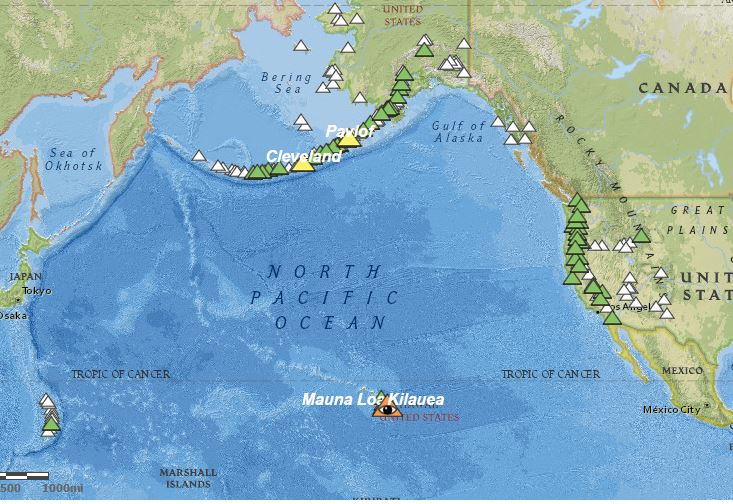
Today the US hazards map shows the following U.S. volcanoes as to be above normal background (elevated unrest or eruptions) or have shown activity that warranted an Information Release (for example, an earthquake swarm):

-Cleveland, Pavlof, Mauna Loa Alert Level=ADVISORY. Aviation Color Code=Yellow.

-Kilauea Alert Level=WATCH. Aviation Color Code=Orange. Note: this one has been erupting for 33 years! (see more here).

More information @

Sunday, September 11, 2016

9/12/16- PREPARING FOR A TSUNAMI- KNOW THE RISK AREAS

This week we talk tsunamis…I recently read in EOS that these natural phenomenon also happened in ancient Mars, having found evidence of 120 m tall waves billions of years ago..

We are obviously more worried about the possible ones here…we actually have a 'Tsunami Preparedness Week', this year held between March 20-26.

A tsunami risk map of the States shows the area along the ring of fire, Hawaii and the West coast, and the US Caribbean islands as the most threatened areas.

In fact, devastating tsunamis have struck North America before and are sure to strike again.. these days the agencies are focusing on faster tsunami warnings, maybe with GPS, or maybe mobile technology, to give people more time to escape to higher ground.


If you are in an area of risk, you should be prepared. The ready.gov website has specifics on what to do.

A lot of useful information can be found online, like the website 'tsunamizone'. If you live in CA, there is an interactive map -below- where the areas of possible risk are colored in pink. Check that website out and see if you are at risk-


Sunday, September 4, 2016

9/5/2016- EARTHQUAKES IN THE USA

If I want to know something about earthquakes, the first websites I go to are: the USGS Real Time Earthquakes Website or the IRIS monitoring website.

This week we are exploring natural seismicity and what countries do to prevent/mitigate this hazard.

Re: the first issue, the new US map of seismicity (see image from USGS) shows the (obvious, in pink) ring of fire portion on the West coast but also a central area in the middle of the plate. I’d like to talk a bit more about this non-obvious one. This area, called the New Madrid Zone was shaken by a M8(!) in 1811. The reason for the activity is a very old intraplate rift placed below the area.


Re: the second issue, I want to focus on the USGS ShakeAlert system, developed for the West coast using some of the existing systems. Today, the technology exists to detect earthquakes, so quickly, that an alert can reach some areas before strong shaking arrives. The purpose of an EEW (Earthquake Early Warning) system is to identify and characterize an earthquake a few seconds after it begins, calculate the likely intensity of ground shaking that will result, and deliver warnings to people and infrastructure in harm’s way. Studies of earthquake early warning methods in California have shown that the warning time would range from a few seconds to a few tens of seconds, depending on the distance to the epicenter of the earthquake. 

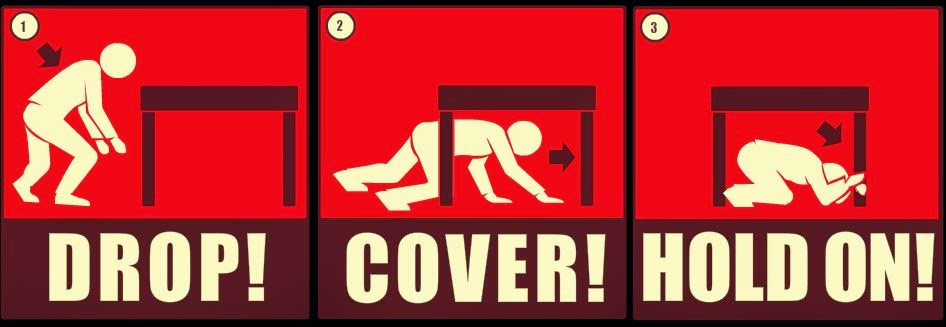
 A few seconds of warning might make all the difference (enough to stop transit/elevators and to drop, cover, hold on). All, watch out for thsi year's ShakeOut on October 20th.

NOTE- Of course the news of a 5.6 quake in the middle of the USA –OK- was news this week, as it was also felt in seven surrounding states. After that event, there was a shutdown of gas-linked wells. The issue of possible man-made or induced quakes once more resurfaces…for more information on those the USGS website is useful.

All for now-


Monday, August 29, 2016

8/29/16- NATURAL HAZARDS- BLAME IT ON TECTONICS

This week we are exploring plate tectonics and how the location of each country respect to the plate boundaries relates directly with their natural hazards -like volcanoes or earthquakes-

In the past days the center of Italy has suffered devastating shakes -news here-. The devastation comes from the poor construction standards on the houses close to the epicenter, not because it was an inactive area..
nobody that knows where the plates are located was surprised by the event.

In the US, the NOAA map shows clearly how the Easter US is a passive margin and the Western side of the country is a very active one, with the Pacific Plate, Cocos, Juan de Fuca plates connecting to the North American plate. Not a surprise we are on the ‘Ring of Fire’, where a lot of the volcanic and seismic activity happens!

Of course, there are a few exceptions, like the activity of Hawaii (hot spot) or the New Madrid area (ancient rift), both not at plate boundaries, but that will be another post another time.

We might not know when events like volcanic eruptions or big earthquakes will happen, but if you know your Tectonics, you definitely know where the do!

All for now-


Other Plate Maps found at USGS or Esri: interactive


Thursday, August 4, 2016

8/4/2016- VISUALIZING GLOBAL NATURAL DISASTERS

Now that the hurricane season is here, is a good idea to check the national hurricane center in case you are planning any travelling in certain parts of the world. We also have numerous news of flash floods and flooding events all around the planet and if you are paying attention, these are very frequent.
To help prepare and/or visualize worldwide natural catastrophes, there are currently several websites you can use, most of them based on Google maps, some still beta, and most of them including tectonic plates-which makes perfect sense to geologists-. I have included a few here.
-The National Association of Radio Distress-Signalling and Infocommunications (RSOE) operates Emergency and Disaster Information Service (EDIS) within the frame of his own web site which has the objective to monitor and document all the events on Earth which may cause disaster or emergency.

-The NOAA viewer website is also useful to point out how active the Ring of Fire is. Also, their billion-dollar weather and climate disaster map is very telling as well –see image on the left-.

-Another resource that is very useful is the information from insurance companies. An example of the losses of 2015 is below, from artemis.

As you can see, catastrophes are everywhere and that is why we will be exploring all these in the Fall during our Geol9 course at MPC.

Should be fun.

Buckle up-