We are discussing extreme weather events this week.
I'll be focusing on Heat waves this week. They occur more often than they used to in major cities across the United States, from an average of two heat waves per year during the 1960s to more than six per year during the 2010s. ... The average heat wave season across 50 major cities is 47 days longer than it was in the 1960s.
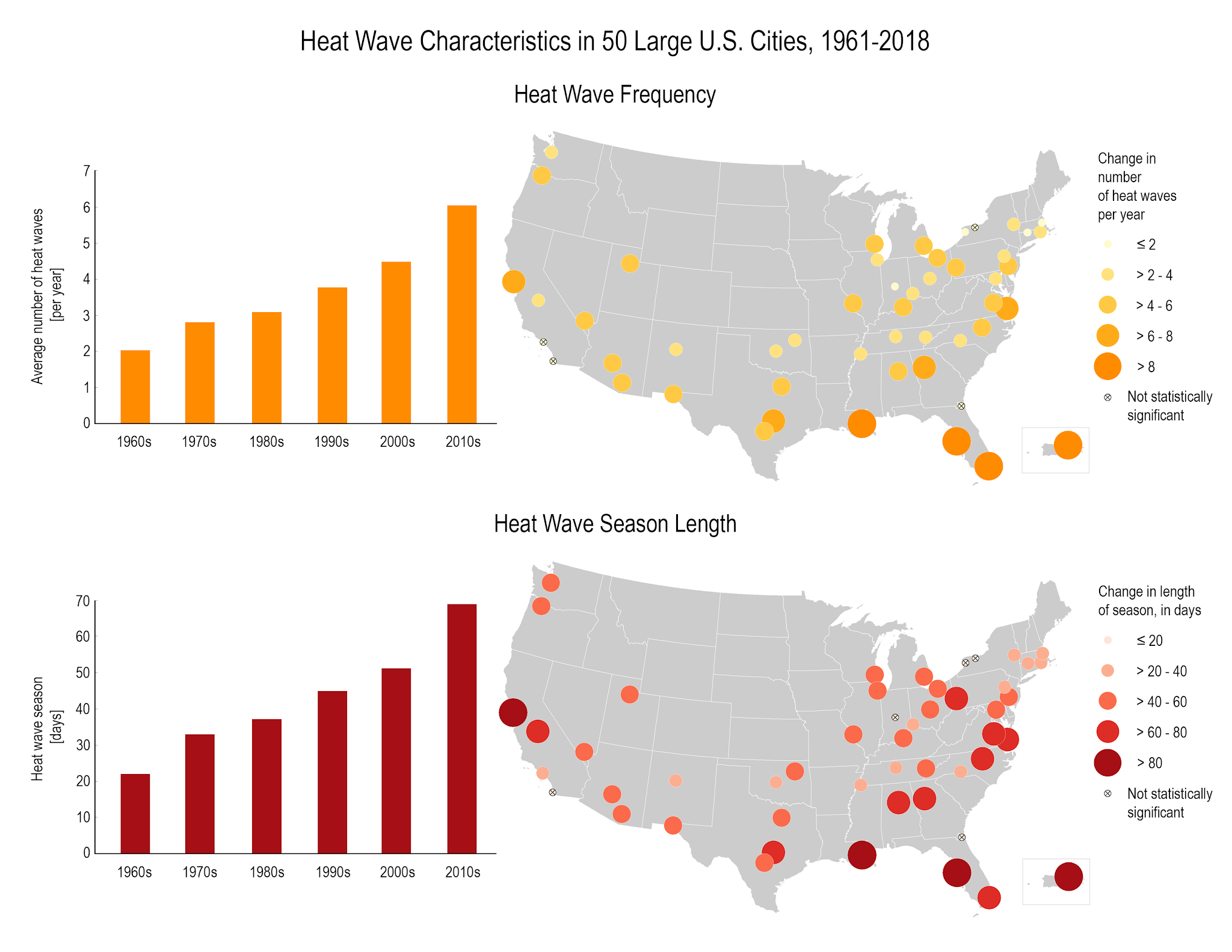
A few summers ago a mega heat wave left California and other Western states enduring the hottest summer on record. That wave killed more than 1 billion sea creatures in the Pacific Northwest!
- Provide community cooling centers, particularly in areas with low-income, elderly, and young populations
- Ensure proper functioning of energy and water systems
- Encourage citizens to check on their family, friends, and neighbors to ensure they have access to air conditioning
- Communicate heat warning information and appropriate responses to the public (e.g., encourage staying indoors, provide symptom reminders)
- Establish systems such as hotlines to alert public health officials about high-risk or distressed individuals
- Encourage energy conservation to reduce demand on electricity systems
- Implement load restrictions for older roads, bridges, and rail to reduce traffic on vulnerable transportation infrastructure
Sites like the Environmental America’s Extreme Weather Map (below) are interactive and help visualize the information of weather-related disasters 2010-2015. Every year, weather-related disasters injure or kill hundreds of Americans and cause billions of dollars in damage. Many of the risks posed by extreme weather will likely increase in a warming world. Scientists have already noted increases in extreme precipitation and heat waves as global warming raises temperatures and exacerbates weather extremes.

The WunderMap is a really useful site to see the severe weather occurrences updated in the States.
Any of the websites I used here are great places to keep yourselves informed so we can prepare for an extreme weather event.
Stay safe and informed!

Hey Ana, I just wanted to say I really enjoyed reading and learning from your post. I thought it was really interesting how Ireland faces a lot of the same extreme weather events as the U.S. like floods at heatwaves, like I said in my post as well I think this is due to climate change so I'm glad we came to the same conclusions and I hope Nations can work together to help fight climate change.
ReplyDeleteYour post brings up a crucial issue which deserves further attention in research and policymaking. There is sufficient evidence that heat waves have been occurring more often and have been lasting longer in recent decades. For instance, there were an average of two heat waves per year in the 1960s, whereas this number has increased by nearly three times since then. At the same time, the period of occurrence of heat waves has expanded, amounting to roughly 47 additional days.
ReplyDeleteThe recent mega heat wave that hit California and the western states has been extremely damaging not only to human populations but to ecosystems as well, such as the loss of marine species in the Pacific Northwest region. Therefore, it is crucial to consider the impact of heat waves on both land and ocean habitats.
Additionally, I would like to commend the preventative measures that you have listed in your post. Creating community cooling centers, raising awareness in the community, and monitoring vulnerable individuals can play a vital role in preventing deaths due to heat waves.
In conclusion, your post provides an excellent overview of the topic, including the causes and impacts of heat waves.