Saturday, May 26, 2018

The 2018 Hurricane Season starts in May this year!


Subtropical Storm Alberto is located 65 miles  N-NW of the western tip of Cuba and is moving to the north-north at 13 mph (20 km/h). This means the storm has wind speeds of at least 38 mph (58 km/h). For it to be a hurricane, the storm has to reach 74 mph (119 km/h). More good information in this new Live science article.

Alberto will threaten the Gulf Coast, from Florida to Louisiana, with flooding, storm surge, and strong winds. Watches and Warnings have been issued. We’ll keep an eye on it. For now, Florida and Mississippi have declared 'states of emergency' ahead of the storm.

The National Hurricane Center website is a great place to get the latest information. Their last path prediction is below.


Sunday, May 13, 2018

end of S18- Disasters Declarations so far [in 2018]


As we wrap another semester studying natural hazards around the world, students are reflecting on the most damaging hazards in their blogs, and how we can mitigate them and protect the population.

As I write this post, FEMA’s disasters website shows that in 2018, the USA had already 20 ‘major disaster' declarations, below:

Hawaii Kilauea Volcanic Eruption And Earthquakes (DR-4366). Incident period: May 03, 2018. Major Disaster Declaration declared on May 11, 2018
Hawaii Severe Storms, Flooding, Landslides, And Mudslides (DR-4365). Incident period: April 13, 2018 to April 16, 2018. Major Disaster Declaration declared on May 08, 2018
North Carolina Tornado And Severe Storms (DR-4364). Incident period: April 15, 2018.
Major Disaster Declaration declared on May 08, 2018
Indiana Severe Storms And Flooding (DR-4363).Incident period: February 14, 2018 to March 04, 2018. Major Disaster Declaration declared on May 04, 2018
Texas McDannald Fire (FM-5237). Incident period: May 02, 2018. Fire Management Assistance Declaration declared on May 02, 2018
Arizona Tinder Fire (FM-5236). Incident period: April 27, 2018. Fire Management Assistance Declaration declared on April 29, 2018
Alabama Severe Storms And Tornadoes (DR-4362). Incident period: March 19, 2018 to March 20, 2018. Major Disaster Declaration declared on April 26, 2018
Kentucky Severe Storms, Tornadoes, Flooding, Landslides, And Mudslides (DR-4361). Incident period: February 21, 2018 to March 21, 2018. Major Disaster Declaration declared on April 26, 2018
Texas Mcclellan Fire (FM-5235). Incident period: April 17, 2018. Fire Management Assistance Declaration declared on April 18, 2018
West Virginia Severe Storms, Flooding, Landslides, And Mudslides (DR-4359). Incident period: February 14, 2018 to February 20, 2018. Major Disaster Declaration declared on April 17, 2018
Ohio Severe Storms, Landslides, And Mudslides (DR-4360). Incident period: February 14, 2018 to February 25, 2018. Major Disaster Declaration declared on April 17, 2018
Texas 335 Fire (FM-5234). Incident period: April 14, 2018. Fire Management Assistance Declaration declared on April 14, 2018
Texas Harbor Bay Fire (FM-5233). Incident period: April 13, 2018. Fire Management Assistance Declaration declared on April 13, 2018
Oklahoma Rhea Fire Complex (FM-5232). Incident period: April 13, 2018. Fire Management Assistance Declaration declared on April 13, 2018
Oklahoma 34 Fire Complex (FM-5231). Incident period: April 12, 2018. Fire Management Assistance Declaration declared on April 13, 2018
Kentucky Severe Storms, Flooding, Landslides, And Mudslides (DR-4358). Incident period: February 09, 2018 to February 14, 2018. Major Disaster Declaration declared on April 12, 2018
Oklahoma Shumach Fire Complex (FM-5230). Incident period: March 16, 2018. Fire Management Assistance Declaration declared on March 16, 2018
American Samoa Tropical Storm Gita (DR-4357). Incident period: February 07, 2018 to February 12, 2018. Major Disaster Declaration declared on March 02, 2018
American Samoa Tropical Storm Gita (EM-3397). Incident period: February 07, 2018. Emergency Declaration declared on February 11, 2018
Vermont Severe Storm And Flooding (DR-4356). Incident period: October 29, 2017 to October 30, 2017. Major Disaster Declaration declared on January 02, 2018

Almost all of these are fire or flooding related. It might be our new normal…this article exposes how underestimated the flooding risk is in the States. In California, the visualization FEMA website shows 281 disasters since 1953. In Monterey County, 22, most of them related to wildfires or winter storms/flooding/mudslides [see map below].


People in charge of planning and budgets should be very well informed of all the possible hazards, their frequency, location, and potential damage. Education is everything.

Stay informed and safe.

Sunday, April 22, 2018

Week 13-COASTAL HAZARDS IN THE US


When I think about coastal erosion, I think about Pacifica, CA, and the 2016 after el NiƱo related storms, when yet another chunk of sandy cliff was falling into the ocean and houses were in need of abandonment. A drone video of the area is clear. A lot of information can be found about how in a few years the cliff has eroded.

Recently two online portals have been developed as an interactive tool for any user to explore what coastal hazards are all about. Also, the National Assessment of Coastal Change Hazards of the USGS has very good information about coastal issues in the country.
The NOAA’s Sea Level Rise Viewer website let you browse over possible scenarios of sea level rise and coast vulnerability. A great link to try!
Today I am going to focus on another link, the USGS Coastal Change Portal. The USGS Coastal Change Hazards Portal is a new tool that allows anyone to explore how coasts change due to: extreme storms, shoreline change, and sea level rise. See images with examples below.

Extreme Storms: this allows ‘real-time and scenario-based predictions of storm-induced coastal change, as well as the supporting data, are provided to support management of coastal infrastructure, resources, and safety.’ For example, let’s focus on the Gulf Coast and a scenario of a hurricane (any category). Let’s see how a Cat 1 and a Cat 5 possibly looks like (with probabilities of collision (dune erosion), overwash, and inundation for sandy beaches along the Gulf and Atlantic coasts during a generalized hurricane landfall): see figures for both. The most probable areas should be risks areas and treated as such in an emergency.

Shoreline Change: this shows: ‘historical shoreline positions and rates of change along ocean shorelines of the United States’. Looking into the East coast now, offshore Norfolk, see figures for long-term coastal change rates, and for the short-term rates (<30 years rates of shoreline change for open-ocean shorelines of the United States ranging from 1970's to 2001).

Sea level Rise: there are two methods used to address this: a Coastal Vulnerability Index (CVI), and a probabilistic assessment of shoreline change. 

CVI: ‘a preliminary overview, at a National scale, of the relative susceptibility of the Nation's coast to sea-level rise through the use of CVI. This classification is based upon the following variables: geomorphology, regional coastal slope, tide range, wave height, relative sea-level rise and shoreline erosion and accretion rates. The combination of these variables and the association of these variables to each other furnish a broad overview of regions where physical changes are likely to occur due to sea-level rise’. A quick image shown here shows how much red (very high vulnerability) our California coasts possess.

Probabilities of Shoreline Change: ‘this dataset was used to develop and evaluate the performance of a Bayesian network (BN) that predicts long-term shoreline change associated with sea-level rise. The BN is used to define relationships between driving forces, geologic constraints, and coastal response, which includes observations of local rates of relative sea-level rise, wave height, tide range, geomorphology, coastal slope, and rate of shoreline change. Using this information, the BN is used to make probabilistic predictions of shoreline change in response to different future sea-level rise scenarios’. See same area of CA and look at the area of south San Francisco.
As you can see this new tool will help tremendously to manage areas and to get a broad idea of what is happening on the US coasts.
Explore those links!-


Saturday, March 31, 2018

Week 10-Xtreme Weather in the US


The difference between weather and climate is a measure of time. Weather is what conditions of the atmosphere are over a short period of time, and climate is how the atmosphere "behaves" over relatively long periods of time [NASA]. We'll be discussing extreme weather events this week [not cyclones].

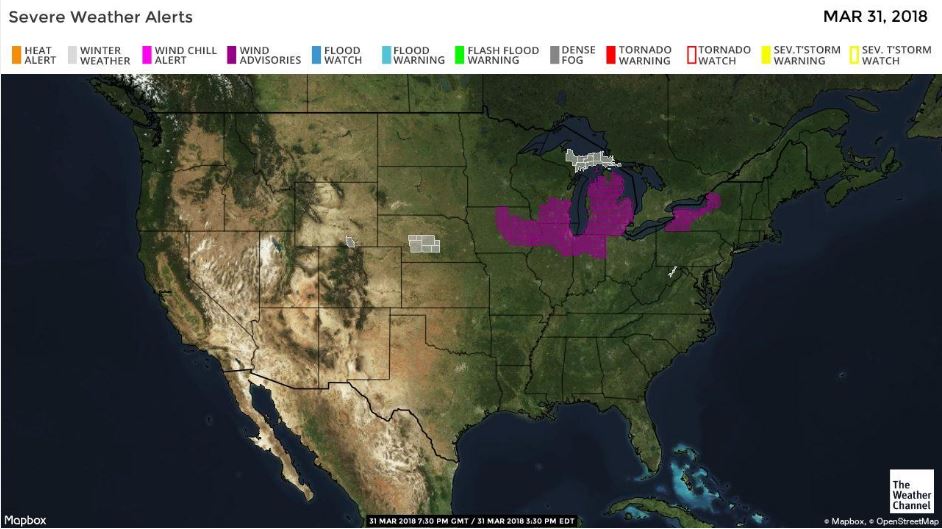
The US Weather Service Current Weather Warnings can be seen in the AccuWeather website or the Weather Channel website. The map shows currently winter weather and wind advisories for the central northern part of the US. Being informed with extreme weather events is the best strategy to be safe and prepare accordingly.


A new interactive map is tracking major weather related events in the States [map below]. It is obvious a few areas get hit again and again…

These days most institutions have a twitter feed you can follow so you are alerted the moment a watch or warning is in effect.

Saturday, March 10, 2018

Week 8- Mudslides Hazards in US- Focus on CA


The largest landslide in modern U.S. history (in terms of volume) was most likely one that occurred in 2013 Bingham Canyon outside of Salt Lake City, Utah. It had a slide mass of 55 million cubic meters (compared to an estimated 10 million cubic meters during the Oso, Washington event). Fortunately, no one was injured or killed during the Utah slide. 


Landslides impact California’s terrain often. These are generally related to precipitation patterns, in particular if there has been previous months of drought conditions. Early this year, across Southern California, heavy rain was causing numerous mudslides and road closures in burn scar areas from recent wildfires. The image on the right clearly shows what type of enormous devastation we are talking about [the total death toll was 20]. That area was previously burned by the Thomas fire, the biggest wildfire in CA’s recorded history, so it is not surprise that heavy rain provoked this mudslides, as the soil had no holding vegetation left.

This is the USGS page with information on how to identify any types of mass wasting events [landslides, mudslides] and what to do if one happens. If you want to know if you are living in a risk area, you can access maps like the USGS below, that shows the Emergency Assessment of Post-Fire Debris-Flow Hazards.

Stay informed and safe-


Saturday, February 17, 2018

Week 5- How to minimize Volcanic Hazards in the US: USGS Alert Codes

This week Geol9 is exploring the volcanic hazards in different countries and their warning systems. I’ll be focusing on the US.
There are several ways we minimize the danger of volcanic activity (apart from the obvious of ‘getting out of the way’…(J:

  • Forecasting (earthquakes as early warnings -although in 2014 a Japanese volcano erupted without any previous seismicity (livescience article), land swelling before eruption, gas emissions, etc.)
  • Volcanic Alert Codes (USGS): the levels of alert and the aviation code levels commonly change at the same time (chart on right). A non-erupting volcano will have a green icon, and a red one indicates an imminent eruption (see USGS Alert Codes).

Today the US hazards map shows 3 U.S. volcanoes as to be above normal background (elevated unrest or eruptions) or have shown activity that warranted an Information Release (for example, an earthquake swarm):


Cleveland and Mauna Loa Alert Level=ADVISORY. Aviation Color Code=Yellow.

Kilauea Alert Level=WATCH. Aviation Color Code=Orange. Note: this one has been erupting for 34 years! (see more here)


More information @

Monday, February 5, 2018

Week 3-S18-Earthquakes-Where and What to Do

This week we are exploring earthquakes and what countries do to prevent/mitigate the hazard. If I want to know something about earthquakes in a place, the first websites I go to are: the USGS Real Time Earthquakes Website or the IRIS monitoring website.

Re: where quakes are located in the US, the 2014 US map of seismicity (see image below from USGS) shows the (obvious, in pink) ring of fire portion on the West coast but also a central area in the middle of the plate. I’d like to talk a bit more about this non-obvious one. This area, called the New MadridZone was shaken by a M8(!) in 1811. The reason for the activity is a very old intraplate rift placed below the area (see image from http://showme.net).

The San Andreas Fault System is responsible for most of California natural quakes...we had over 550 in the last month...up north, the Cascadia Subduction Zone will be responsible for next big one that area has. So, at least we start to knwo the 'why' of these quakes.

Re: the 'what to do about it', apart from the obvious need for education, I want to focus on the USGS ShakeAlert system, developed for the West coast using some of the existing systems. Today, the technology exists to detect earthquakes, so quickly, that an alert can reach some areas before strong shaking arrives. The purpose of an EEW (Earthquake Early Warning) system is to identify and characterize an earthquake a few seconds after it begins, calculate the likely intensity of ground shaking that will result, and deliver warnings to people and infrastructure in harm’s way. Studies of earthquake early warning methods in California have shown that the warning time would range from a few seconds to a few tens of seconds, depending on the distance to the epicenter of the earthquake. 

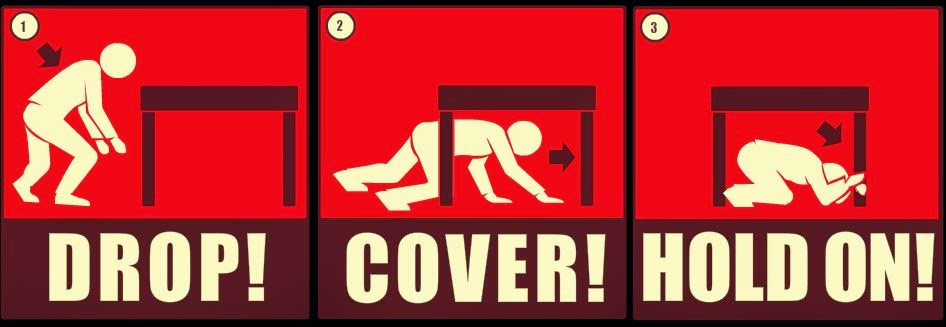
A few seconds of warning could make all the difference (enough to stop transit/elevators and to drop, cover, hold on).


All for now-